Just a Little Dose of Aspirin

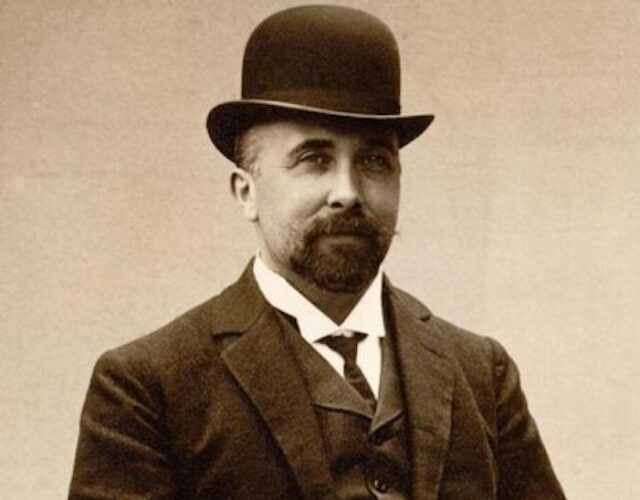
Felix Hoffmann's father suffered from a painful case of rheumatism, and he asked his son to find him a medicine that didn't have the negative side effects of sodium salicylate, the drug commonly prescribed at the time for that and other ailments. After all, Felix was a chemist with Friedrich Bayer Company.
Felix researched decades of other scientists' experiments and conducted many of his own in an effort to grant his father's request. Then, on August 10, 1897, he made his first sample of acetylsalicylic acid. On March 6, 1899, he patented it under the brand name Aspirin.
The A stood for "acytyl." The spir is for "spiraea ulmaria," a plant commonly known as "meadowsweet" that is rich in one of the main ingredients of aspirin. And in was a suffix often used in the names of medicines and chemical compounds.
Aspirin quickly became the go-to drug with a variety of uses: reducing fevers, alleviating pain, thinning blood, etc. By 1950, the Guinness Book of World Records listed aspirin as the most frequently sold painkiller. It became so ubiquitous that the capital A was soon dropped as people used "aspirin" as a generic term. Sort of the way people use the name Kleenex as a generic term for any and every tissue. Doctors were said jokingly to treat every ailment by telling patients, "Take two aspirin, and call me in the morning."
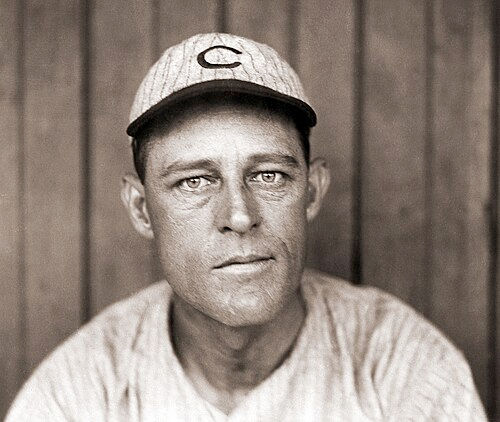
Many major league baseball teams needed some aspirin after the Chicago Cubs signed third baseman Harry Steinfeldt on this date in 1906. He completed a formidable infield combinati9on that included the famed double-play trio of Joe Tinker (shortstop), Johnny Evers (second base), and Frank Chance (first base). Their remarkable teamwork was made even more famous in the following short poem, "Baseball's Sad Lexicon":
These are the saddest of possible words:
"Tinker to Evers to Chance."
Trio of bear cubs, and fleeter than birds,
Tinker and Evers and Chance.
Ruthlessly pricking our gonfalon bubble,
Making a Giant hit into a double--
Words that are heavy with nothing but trouble:
"Tinker to Evers to Chance."

Antiwar radio DJs also needed a lot of aspirin in 1966, when Barry Sadler's song "Ballad of the Green Berets" hit the top of the charts--and stayed there for 13 straight weeks.

Sadler was himself a Green Beret medic staff sergeant. In May 1965, while on patrol near Pleiku, Vietnam, he stepped on a punji stick. That often meant death to the victims because of the raging infection that usually set in afterwards from the filth the Viet Cong smeared on the sticks before placing them in the ground. But Sadler dressed his own wound and completed his mission before being sent to a hospital back in the States at Fort Bragg, where he fully recovered. Only seven months later, in December, he had written and released his ballad. It not only hit the top of the charts in the New Year but also became the title song of the movie The Green Berets, starring John Wayne.
As a young boy, I loved the song and the patriotic feelings it engendered. I once called the WNOX request line and asked that they play "The Ballad of the Green Berets." Instead, they played "Little Green Apples," another popular song of the time. At least they got the "green" part right, just not the "beret."
And to think that all of this began with a little rheumatism and a dose of aspirin!


Comments